

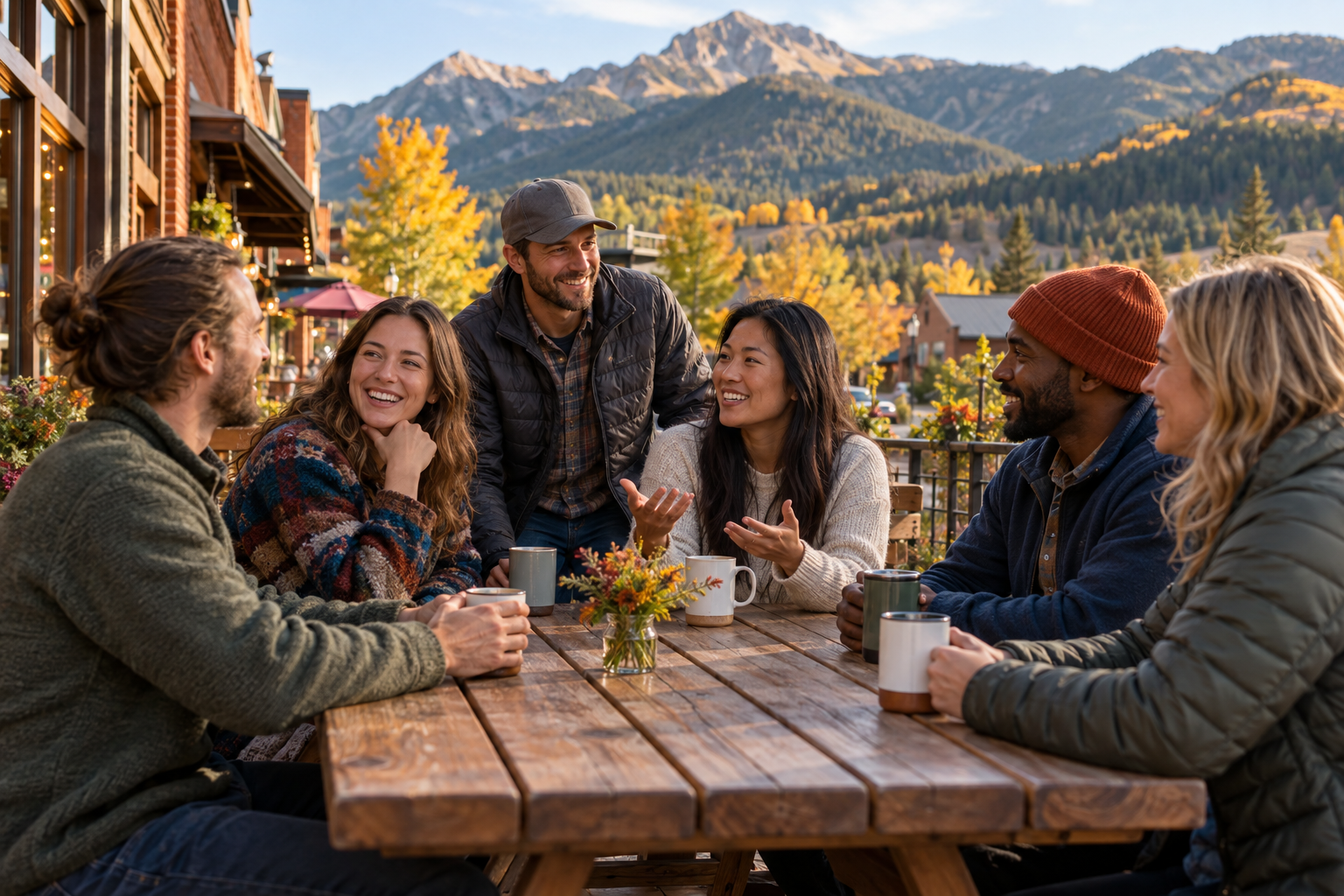
Moving to a mountain town can be exciting.
You may have a new job, beautiful surroundings, outdoor activities, and a completely different daily routine. However, even a successful move can feel lonely at first.
Small communities are not automatically easy places to make friends. Longtime residents may already have established relationships, while seasonal workers and visitors may come and go throughout the year.
Building a sense of community usually takes time, consistency, and a willingness to participate.
Here are practical ways to begin feeling more connected after moving to a mountain town.
Give Yourself Time
It is normal not to feel at home immediately.
Relocating involves more than unpacking boxes and learning a new route to work. You are also adjusting to unfamiliar businesses, weather, transportation, routines, and social expectations.
Avoid judging the move too quickly.
The first few weeks may feel exciting but disorganized. Later, the initial excitement may fade before deeper connections have developed. That does not necessarily mean you chose the wrong community.
Belonging often grows slowly through repeated experiences: seeing the same person at a coffee shop, attending a regular event, helping a coworker, or recognizing neighbors during a walk.
Become a Regular Somewhere
Familiarity is one of the simplest foundations for community.
Choose a few local places you genuinely enjoy and visit them regularly. That might include:
- A coffee shop
- A library
- A gym
- A farmers market
- A music venue
- A restaurant
- A community center
- A local trail
- A bookstore
- A recreation class
You do not need to force conversations. Begin by being friendly, learning names, and showing up consistently.
Over time, brief interactions can become real relationships.
Attend Recurring Events
One-time festivals are fun, but recurring activities are often better for meeting people.
Look for weekly or monthly opportunities such as:
- Group hikes
- Trivia nights
- Open-mic events
- Community classes
- Book clubs
- Cycling groups
- Volunteer days
- Recreational sports
- Art workshops
- Local government meetings
Recurring events allow you to see the same people more than once. That makes conversation easier and creates natural opportunities to become involved.
Choose activities you genuinely enjoy. Shared interests make connection more comfortable and sustainable.
Volunteer
Volunteering is one of the most meaningful ways to become part of a community.
Mountain towns may rely on volunteers to support local organizations, environmental projects, festivals, youth programs, animal shelters, food banks, arts groups, and trail systems.
Volunteer opportunities might include:
- Maintaining trails
- Helping at community events
- Supporting a local food pantry
- Assisting an animal rescue
- Coaching youth activities
- Participating in cleanup projects
- Helping a theater or arts organization
- Supporting emergency or safety programs
Volunteering provides a reason to work alongside other people rather than trying to create friendships through conversation alone.
It also demonstrates that you care about the community as more than a recreational destination.
Support Locally Owned Businesses
Local businesses are often gathering places as well as employers.
Shopping locally helps sustain the people who make the community distinctive. It can also help you learn more about local events, organizations, and concerns.
Talk with business owners and employees when they are not busy. Ask for recommendations. Attend their events and share positive experiences with others.
Supporting local businesses does not require spending beyond your budget. Small, consistent choices can still contribute.
Build Relationships With Coworkers
Your workplace may provide your first social network after relocating.
Be open to getting to know coworkers, but allow relationships to develop naturally. Join a group meal, participate in an appropriate workplace activity, or invite a coworker for coffee or a walk.
Seasonal workplaces can create strong friendships because employees are often navigating the same transition. However, workplace relationships can also change when the season ends.
Try to develop connections beyond your employer so your entire community experience does not depend on one job.
Learn About the Town’s History and Challenges
A mountain town is not simply a scenic setting.
It is a community with a history, economy, culture, and real challenges. Residents may be concerned about housing, wages, tourism, environmental protection, development, traffic, or the loss of local businesses.
Learning about these issues can help you understand why people feel strongly about certain changes.
Read local news. Attend public meetings. Visit historical organizations. Listen to longtime residents without assuming that every tradition must remain unchanged.
You do not have to agree with everyone, but showing respect for the community’s history can help you become a more thoughtful resident.
Avoid Acting Like a Permanent Tourist
There is nothing wrong with being excited about your new home.
However, residents may respond negatively if newcomers treat the community only as an outdoor playground.
Remember that other people are raising families, running businesses, attending school, commuting to work, and managing everyday responsibilities.
Respect private property. Follow trail and parking rules. Drive safely. Dispose of waste properly. Be considerate during crowded seasons.
Enjoying the mountains and behaving like a responsible resident should go together.
Be Open to Different Types of People
A genuine community will include people with different backgrounds, beliefs, ages, occupations, and lifestyles.
Do not limit yourself to people who moved for the same reason you did or participate in the same activities.
A coworker, neighbor, business owner, artist, teacher, longtime resident, retiree, or fellow volunteer may offer a perspective you would not otherwise encounter.
Approaching people with curiosity and respect can make the transition richer.
Create the Connection You Are Looking For
If you cannot find an existing group that matches your interests, consider starting something small.
You might organize:
- A weekly walk
- A casual music gathering
- A board-game night
- A professional networking meetup
- A volunteer project
- A photography group
- A community meal
- A beginner outdoor activity
Keep the first gathering simple and welcoming. It does not need to become a large organization.
Sometimes several people are waiting for someone else to make the first move.
Stay Connected During the Off-Season
Some mountain communities change significantly when the busiest season ends.
Visitors leave, seasonal employees move away, and businesses may reduce their hours. The quieter period can feel isolating, but it can also be when stronger local relationships develop.
Continue attending events, visiting businesses, and checking in with people during slower months. You may gain a deeper appreciation for the community when it is no longer focused primarily on visitors.
Belonging Comes Through Participation
Feeling at home in a mountain town rarely happens because of the scenery alone.
Belonging develops when you participate, contribute, listen, and allow people to know you over time.
You do not need to become involved in everything. Choose a few activities, organizations, or local places that matter to you and show up consistently.
The goal is not to prove that you belong.
It is to build genuine relationships while becoming a responsible and caring member of the community.
That process may take time, but it can become one of the most rewarding parts of mountain-town life.